EDI 940 and 945 Explained: Warehouse Order Flows for 3PL and Retail Fulfillment
- DataSync
- 07 Sep, 2026
- 03 Mins read
- Edi
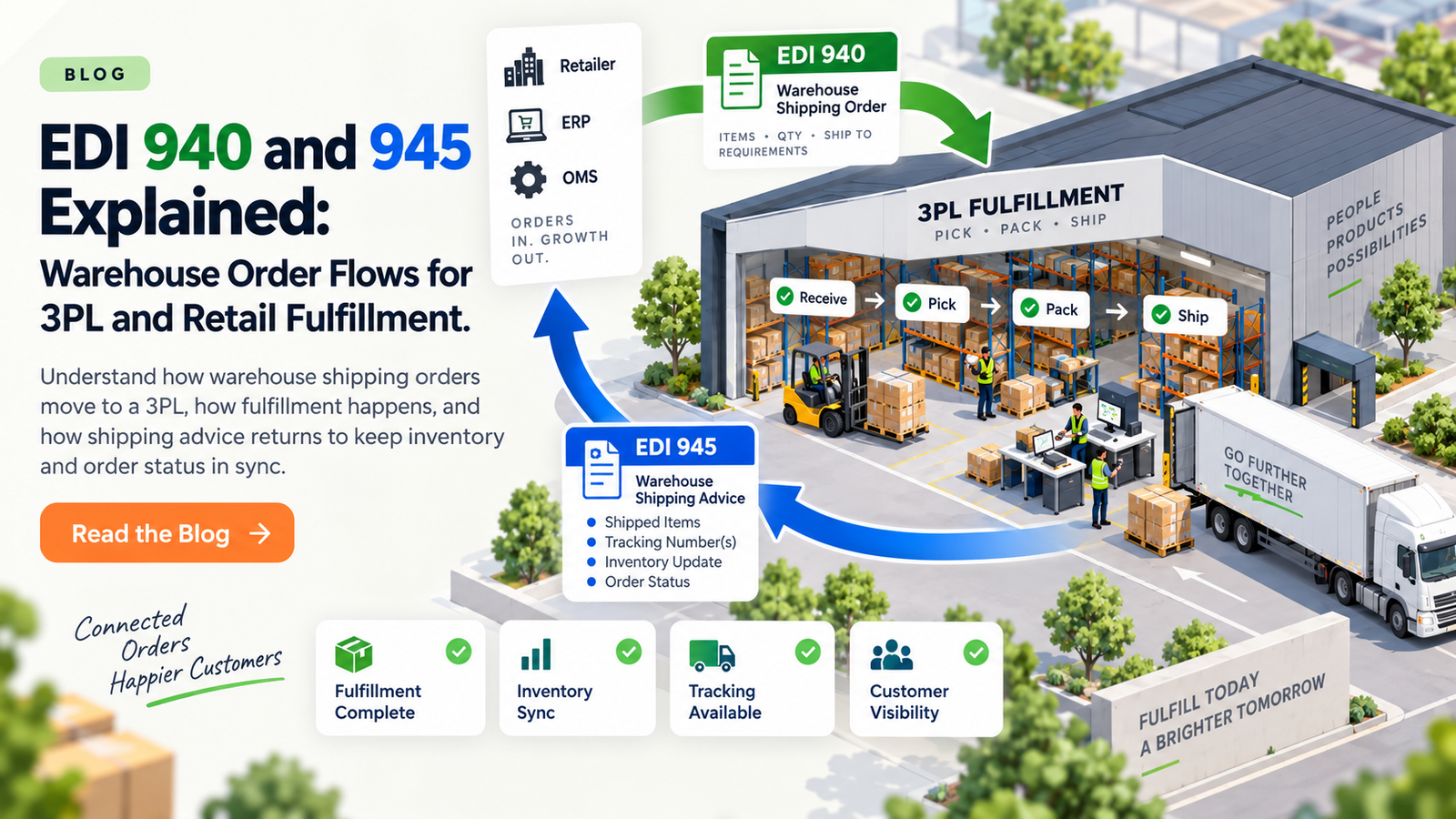
In warehouse and fulfillment workflows, EDI 940 and EDI 945 work together to tell a warehouse what to ship and then confirm what actually shipped.
These transaction sets are common in retail, wholesale distribution, third-party logistics, and brands that outsource fulfillment to a 3PL.
What Is EDI 940?
The EDI 940 Warehouse Shipping Order is sent to a warehouse or 3PL to request shipment of goods.
It usually includes:
- Order number and references
- Ship-to name and address
- Requested ship date
- Item identifiers and quantities
- Carrier or service instructions
- Special handling requirements
For fulfillment teams, the 940 starts the warehouse execution process. It gives the warehouse the information needed to pick, pack, and ship an order.
What Is EDI 945?
The EDI 945 Warehouse Shipping Advice is sent back by the warehouse after the shipment is processed.
It usually confirms:
- What items shipped
- Actual shipped quantities
- Shipment date
- Carrier and tracking details
- Lot, serial, or inventory details when required
- Shortages, substitutions, or exceptions
For retailers and brands, the 945 is the confirmation that the warehouse completed the shipment and that the order can move to customer updates, invoicing, or inventory adjustment.
How 940 and 945 Work Together
A common warehouse EDI flow looks like this:
- The retailer, brand, or ERP sends an EDI 940 to the warehouse
- The warehouse management system creates the pick, pack, and ship task
- The warehouse ships the goods
- The warehouse sends an EDI 945 back with shipment results
- The ERP, order system, or customer service system updates order status
This creates a closed loop between order release and shipment confirmation.
Why This Flow Matters
Without a reliable 940 and 945 flow, teams often deal with manual emails, delayed order updates, and inventory mismatches.
Strong warehouse EDI helps teams:
- Release orders to 3PL partners faster
- Reduce manual warehouse instructions
- Confirm shipment activity automatically
- Improve inventory visibility
- Support cleaner customer and retailer updates
- Reduce billing and fulfillment disputes
The 940 tells the warehouse what should happen. The 945 tells the business what actually happened.
Common Problems With EDI 940
EDI 940 issues often appear before the warehouse can start work.
Common problems include:
- Invalid ship-to addresses
- Missing item identifiers
- Incorrect units of measure
- Unsupported carrier service codes
- Order references that do not match the receiving system
- Missing routing or handling instructions
When these issues happen, the order may fail to import into the warehouse system or require manual correction.
Common Problems With EDI 945
EDI 945 issues usually affect downstream visibility after the warehouse ships.
Common problems include:
- Shipped quantity does not match ordered quantity
- Tracking number is missing or malformed
- Item numbers do not match the original 940
- Shipment confirmation arrives late
- Lot or serial details are incomplete
- Partial shipments are not represented clearly
These issues can delay customer notifications, invoicing, replenishment, and inventory updates.
Best Practices for Warehouse EDI
To make 940 and 945 workflows more reliable, teams should maintain clear partner rules and strong monitoring.
Useful practices include:
- Validate item, location, and carrier data before sending a 940
- Track every 940 through acknowledgment, warehouse import, and shipment confirmation
- Match each 945 back to the original order and line items
- Alert teams when shipment confirmation is late
- Monitor quantity mismatches and repeated partner errors
- Keep implementation guides aligned between ERP, EDI platform, and WMS
The goal is not only to exchange files, but to keep fulfillment execution visible from order release to shipment confirmation.
Final Takeaway
If you work with a warehouse or 3PL, EDI 940 and EDI 945 are core transaction sets for fulfillment operations.
The 940 sends the shipping order to the warehouse. The 945 confirms what shipped. Together, they help businesses automate fulfillment, improve shipment visibility, and keep order and inventory systems aligned.
Our Team Members